
Horizontal Directional Drilling (HDD) for Water, Sewer, Gas, Telecom & Hydro
Horizontal Directional Drilling (HDD)—also called directional boring or trenchless boring—is a proven way to install pipe, conduit, or duct underground with minimal surface disruption. Instead of open-cut trenching, an HDD rig drills a guided bore path beneath obstacles like roads, rail corridors, driveways, and water crossings, then installs the product through the bore.
Serving the GTA, Halton Region, Peel Region, York Region, Durham Region, and Ontario, SER Sabi Group supports municipal, utility, and private infrastructure teams with planned, coordination-friendly HDD in congested right-of-way (ROW) corridors.
Established 2004
Two generations in infrastructure
100+ years
Combined team experience
Based in Whitchurch-Stouffville
Mobilizing across GTA & Ontario
Fast Quote Checklist (Send This Upfront)
For the fastest, most accurate HDD estimate, share:
- Crossing length and approximate alignment
- Target depth and clearance constraints
- Product type (pipe, conduit/duct, bundle/duct bank) and diameter
- Surface restoration requirements (asphalt, concrete, landscaping, interlock)
- Known congestion/constraints (utility density, limited access, traffic staging)
- Drawings, sketches, and locate sheets (if available)
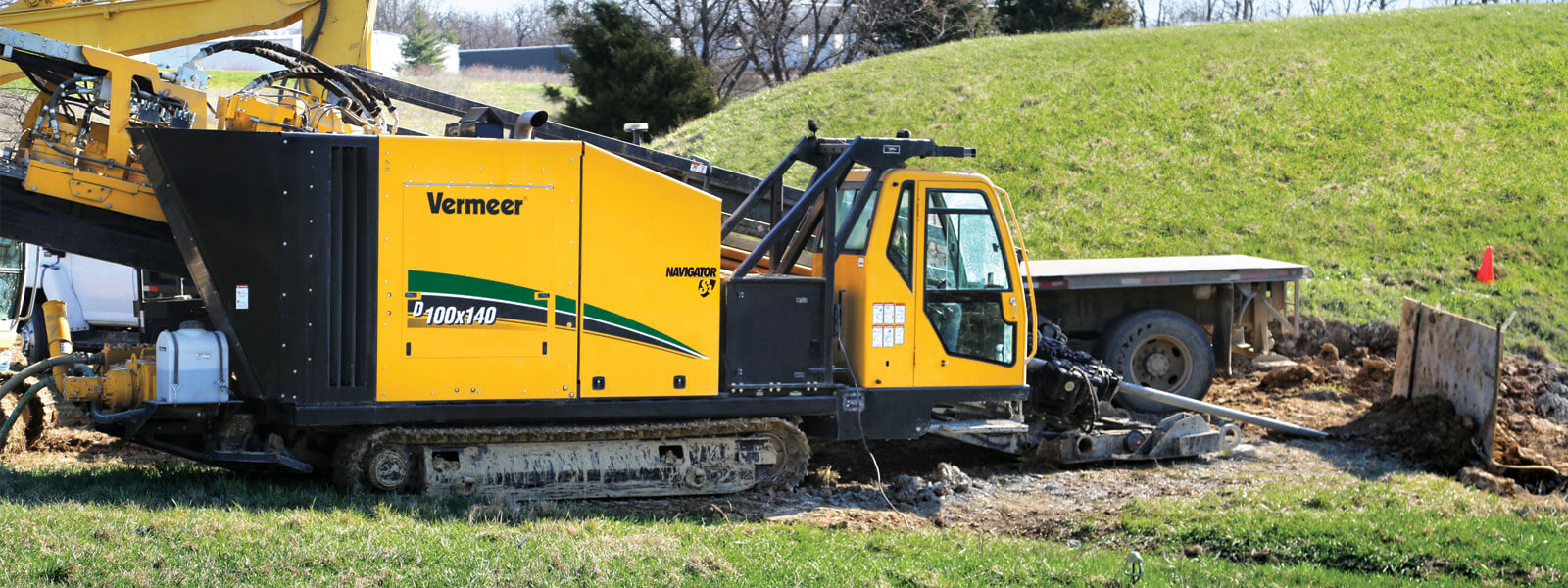
How HDD Works
(Pilot Bore → Ream → Pullback)
Most HDD installations follow three core stages. The difference between a smooth crossing and a risky one usually comes down to upfront planning, verification of existing utilities (daylighting/potholing), and disciplined control of the work zone.
Pilot Bore
A steerable drill creates the planned underground path. Bore tracking helps maintain depth and alignment while protecting clearance targets
in congested corridors.
Ream
The pilot hole is enlarged to suit the product diameter and ground conditions. Reaming strategy is chosen to support bore stability and clean pullback.
Pullback
The pipe or conduit is pulled through while controlling pull force and bend limits. Good staging, product handling, and lubrication planning keep the install predictable.
HDD Applications by Sector
HDD is often selected when open-cut excavation would drive up restoration costs, disrupt traffic, or increase utility strike risk in tight rights-of-way. Below are common trenchless applications we support across the GTA and Ontario—organized by sector so you can match the method to the scope, corridor constraints, and closeout expectations.
Full-Service HDD – Start-to-Finish Delivery
Full-service HDD (directional boring) delivery—planned around locates, access, traffic/ROW constraints, and restoration standards. From pre-construction planning and Pilot → Ream → Pullback execution to tie-ins and closeout documentation, SER Sabi Group supports predictable crossings and clean turnover on GTA utility corridors.
Need urgent support?
SER Sabi Group has a 24/7 emergency line — call if your project requires rapid response.
Ontario HDD Planning & Safety Checklist (Locates, ROW, Congestion)
Even though HDD is trenchless, entry/exit pits, daylighting/potholing, and verification points are still excavations. In Ontario corridors—especially Toronto, Halton, Peel, York and Durham—successful HDD schedules start with locates, exposure planning, and disciplined work zone controls.
Locates & Timing (Ontario One Call)
Standard locate requests must be submitted at least 5 business days before excavation and not more than 30 calendar days in advance.
If a request is submitted more than 10 calendar days ahead of expected excavation, it may be placed on “long term suspend” and transmitted closer to the date.
For advanced/large dig sites, timelines and processes can differ—confirm requirements during planning.
Services Must Be Located & Marked (Ontario Regulation)
Before excavation begins, underground services in and near the work area must be accurately located and marked. Align your HDD plan (pits, daylighting, staging) to locate coverage and any utility-owner conditions before mobilizing.
Daylighting / Potholing & Electrical Proximity Practices (ESA)
Where underground electrical distribution is present, test holes are used to confirm depth and alignment. Once a line is located, excavation within 0.3 m (1 ft) of the line should be completed by hand digging or vacuum excavation, and mechanical excavation should not be used closer than that. When reliable exposure is critical in tight corridors, pairing HDD with hydrovac potholing supports controlled verification.
If Something Is Unmarked, Stop & Confirm
Unexpected underground plant happens in congested ROW. If underground equipment is discovered that was not identified by the locate, halt work and contact the appropriate parties before continuing. This simple rule prevents escalation and protects crews, owners, and the public.
Planning HDD in Congested ROW
(Toronto, Halton, Peel, York, Durham)
In the GTA, HDD success is often decided by what happens outside the bore itself: entry/exit pit placement, traffic staging, restoration limits, and buried utility congestion. A practical bore plan identifies daylighting points, sets clearance targets, and builds the sequence around locate timing and site access.
Common HDD Crossing Scenarios
- Road and intersection crossings (arterials, collectors, tight curb lines)
- Rail corridors and restricted-access zones (as applicable)
- Watercourse crossings (as applicable)
- Tight easements and high-density utility corridors
- High-restoration surfaces (asphalt, concrete, interlock, landscaping)
Work Zone Discipline & Communication
Clear site controls, consistent crew communication, and documented decisions reduce surprises. For more detail on training and compliance expectations, align HDD scopes to your safety program and field procedures.
Documentation and Closeout (What Owners and GCs Usually Need)
For utility owners and GCs, closeout is where HDD either feels professional or painful. Typical deliverables may include:
- As-built support and alignment notes (as required by the project)
- Bore logs or tracking summaries (where available/required)
- Locate documentation references and daylighting confirmations
- Restoration sign-off aligned to project standards
- Field change notes (especially in congestion-heavy corridors)
Fast Quote Checklist (Send This Upfront)
For the fastest estimate, share crossing length, target depth, product type (pipe or conduit/duct), utility congestion notes, and surface restoration requirements. If you have drawings, sketches, or recent locate sheets, attach them.
Ready to price an HDD crossing in the GTA or Ontario?
Selected Project Experience
Experience matters most in congested corridors and sensitive crossings.
Here are examples of project scopes SER Sabi Group has supported across Ontario.
Lake Simcoe Water Crossing (Georgina Island)
3 km fibre optic water crossing supporting community connectivity and essential services.
YorkNet Fibre Program
60 km
fibre scope
— 40 km installed
within 60 days.
York Durham Line Force Sewer
7.4 km of
50 mm conduit
installed in
rock/shale ground conditions.
General HDD FAQs
Is horizontal directional drilling the same as directional boring?
Yes. Many people use the terms interchangeably. HDD generally refers to a guided, trenchless drilling method used to install conduit or pipe beneath obstacles with minimal surface disruption.
What are the typical stages of an HDD installation?
Most HDD installations follow three core stages: pilot bore (steer the path), ream (enlarge to the required diameter), and pullback (install the conduit or pipe through the bore).
What site conditions can make HDD difficult or unsuitable?
HDD may not be the best fit where there is insufficient workspace, extreme congestion at shallow depths, challenging ground conditions that prevent steering or stability, or where the project can’t support appropriate fluid management and controls.
How much space is needed on-site for HDD?
Space needs vary by rig size and install type, but HDD typically requires room for entry and exit setup, drill rod handling, and staging the product or assembling it in planned sections.
What are drilling fluids and why do they matter?
Drilling fluid (often a bentonite-based slurry) helps stabilize the bore, carry cuttings, and reduce friction during drilling and pullback. Good fluid management supports performance and reduces cleanup impacts.
How is the drill path tracked, and what happens if conditions change?
The pilot bore is tracked using guidance and steering systems to maintain the planned path. If unexpected conditions appear, crews may pause, verify, and adjust the plan before continuing.
Fiber / Telecom HDD FAQs
What telecom work is HDD best for?
HDD is ideal for installing telecom conduit or duct under roads, driveways, rail corridors, and landscaped areas where open-cut restoration is costly or disruptive.
Can HDD install multi-duct banks or bundles?
Yes. HDD can install single or multiple conduits depending on design, diameter needs, and corridor constraints. We plan the bore size and pullback approach around the product bundle and bend requirements.
How do you protect existing buried telecom during drilling?
We coordinate locates and confirm critical crossings with exposure/daylighting where needed. If we identify congestion risk, we adjust alignment, depth, and method before drilling continues.
What information do you need to quote a telecom HDD crossing?
At minimum: crossing length, target depth, conduit or duct size and quantity, preferred entry and exit locations, and restoration expectations. Drawings or marked-up maps speed up pricing.
What drives telecom HDD cost in the GTA?
Costs typically change with crossing length and diameter, utility congestion, traffic control needs, access and laydown space, and restoration requirements (asphalt, concrete, landscaping).
How do you ensure conduits can be pulled through without damage?
We plan the bore path and curvature to suit the product and pulling method, then manage pullback controls to reduce stress on the product during installation.
Electrical / Conduit (Hydro) HDD FAQs
Is HDD suitable for electrical conduit and duct banks?
Yes. HDD is commonly used for installing electrical conduit under crossings and in areas where open-cut is difficult due to traffic, restoration, or congestion.
How do you work safely near existing electrical infrastructure?
We coordinate locates, confirm critical crossings as required, and follow site-specific utility protection controls. If conditions don’t match expectations, we pause and re-plan before proceeding.
Can HDD be used in congested urban corridors?
Often yes, but planning is key. We evaluate available entry and exit space, the utility environment, and restoration and traffic constraints to choose the safest alignment and method.
What do you need from an owner or GC to start an electrical HDD job?
Scope details (length and depth), conduit requirements, drawings or corridor maps, site access constraints, and any utility or municipal requirements. If it’s within an active ROW, traffic and restoration requirements are also critical.
How do you manage alignment accuracy for conduit installs?
We plan the bore path, track progress during the pilot bore, and confirm key crossings. When the corridor is high risk, we add additional verification steps before reaming and pullback.
What deliverables can you provide after completion?
We can support a closeout package that includes installation notes and as-built information aligned with the project’s documentation requirements.
Gas HDD FAQs
Is HDD used for gas line crossings?
Yes. HDD is often used for gas crossings where open-cut is undesirable due to traffic impacts, restoration cost, or corridor constraints, subject to project and utility requirements.
How do you coordinate gas HDD work with utility or owner requirements?
We align the plan with the project’s technical requirements and coordination process, including locates, site constraints, and any required verification steps before and during drilling.
How do you reduce risk near existing gas and other buried utilities?
We coordinate locates and confirm critical conflict points as required. When corridor risk is high, we verify crossings via exposure/daylighting before proceeding.
What are common schedule constraints on gas HDD jobs?
Windows are often shaped by coordination requirements, traffic and ROW approvals, and sequencing with other trades. Early drawings and site constraints help lock in a workable plan.
What drives gas HDD pricing?
Pricing usually depends on crossing length and diameter, congestion, access, traffic control, restoration standards, and any project-specific compliance or documentation needs.
What should we provide for a fast quote?
Crossing length and depth, pipe or conduit needs, preferred entry and exit points, restoration requirements, and any project or utility constraints. Marked-up drawings accelerate feasibility confirmation.
Water HDD FAQs
When is HDD a good choice for watermain work?
HDD is a strong option for watermain crossings under roads, rail corridors, driveways, and environmentally sensitive areas where you want to minimize surface disruption and restoration.
Can HDD be used for both short crossings and longer corridor installs?
Yes. HDD can support short, targeted crossings and longer alignments—feasibility depends on product size, bend limits, access/staging space, and corridor constraints.
What information do you need to quote a water HDD crossing?
Crossing length, target depth, pipe size/type, preferred entry/exit locations, surface restoration requirements, and any schedule/traffic constraints. Drawings and utility mark-ups help confirm alignment quickly.
How do you reduce risk near existing utilities during water HDD?
We coordinate locates and identify conflict points early. Where risk is elevated, critical crossings can be verified via exposure/daylighting so the bore path is confirmed before advancing.
What are the main cost drivers for water HDD in the GTA/Ontario?
Cost is typically influenced by length/diameter, utility congestion, ground conditions, access/laydown, traffic control needs, restoration standards, and documentation/closeout requirements.
What closeout deliverables are typical for water HDD projects?
Common deliverables include as-built or alignment notes, restoration sign-off documentation, and project photo records when requested by the owner/GC.
Sewer HDD FAQs
When is HDD a good fit for sewer work?
HDD is often used for sewer-related crossings where open-cut would be disruptive—especially under roads/rail or in constrained corridors—when the design and site conditions support a controlled bore path.
Can HDD be used for force mains and sewer crossings?
Yes. HDD is commonly used for force main crossings and similar installations, with approach and feasibility based on pipe size/type, alignment constraints, and site access for staging and pullback.
What do you need to quote a sewer HDD install?
Length, depth targets, pipe size/type, entry/exit locations, restoration expectations, and any constraints (traffic/ROW windows, limited access, nearby infrastructure). Plans/profiles speed up feasibility checks.
How do you manage corridor constraints and tie-in planning for sewer projects?
We plan the bore path around access limits, congestion, and restoration requirements, and coordinate sequencing so the HDD install aligns with excavation/tie-in activities and project schedule.
What drives cost for sewer HDD in Ontario?
Key drivers include length/diameter, ground conditions, congestion, access/staging, traffic control, restoration standards, and any project-specific inspection/testing or closeout requirements.
What restoration expectations are typical after sewer HDD?
Restoration typically depends on surface type and project standard (asphalt, concrete, landscaping). Setting restoration scope upfront helps avoid delays and keeps closeout smooth.
HDD Service Coverage Across Toronto & the GTA
(Peel, York, Durham & Halton)
SER Sabi Group provides HDD across the Greater Toronto Area and surrounding regions, including Peel, York, Durham, and Halton—plus broader Ontario mobilization for program work and specialized crossings.
Areas We Provide Horizontal Directional Drilling Near You
Serving Toronto, Halton, Peel, York, and Durham, SER Sabi Group provides coordinated Horizontal Directional Drilling (HDD) (directional boring / trenchless drilling) for utility crossings that reduce surface disruption, support safer work in congested rights-of-way (ROW), and help keep traffic and site access moving.
Durham Region – Reliable HDD for Utility Crossings in Busy Corridors
SER Sabi Group serves the Durham Region with planned, coordination-friendly horizontal directional drilling for conduit and pipe installation under roads, intersections, and sensitive surfaces—helping reduce restoration, manage utility congestion, and support predictable project schedules.
Ajax – Suburban Corridor Crossings with Reduced Restoration
Ajax projects benefit from trenchless HDD that limits surface cuts and helps keep access open where disruption must be minimized.
Popular service areas:
- Central Ajax
- Duffins Bay
- Highbush
- Woodlands
- Pickering Village
- Southwood
- Nottingham
- Westney Heights
- Riverside
- Applecroft
Pickering – Efficient Crossings for Lakeside and Arterial Routes
Pickering corridors benefit from directional boring that supports controlled crossings and predictable reinstatement on high-traffic routes.
Popular service areas:
- Amberlea
- Rougemount
- West Shore
- Bay Ridges
- Highbush
- Rosebank
- Woodlands
- Village East
Oshawa – Trusted Trenchless Support for Mature and Expanding ROW
Oshawa projects rely on HDD planning that accounts for utility congestion, access constraints, and restoration standards.
Popular service areas:
- Centennial
- O’Neill
- Vanier
- Lakeview
- McLaughlin
- Eastdale
- Donevan
- Pinecrest
Whitby – Year-Round Corridor Work with Reduced Surface Impact
Whitby scopes benefit from HDD that helps reduce traffic disruption and limits restoration near curbs, sidewalks, and driveways.
Popular service areas:
- Brooklin
- Blue Grass Meadows
- Pringle Creek
- Rolling Acres
- Downtown Whitby
- Port Whitby
- Lynde Creek
- Williamsburg
Clarington – Scalable HDD for Expanding Communities
Clarington projects benefit from trenchless installation strategies that reduce surface disruption on longer routes and staged access corridors.
Popular service areas:
- Bowmanville
- Newcastle
- Orono
- Hampton
- Newtonville
- Enniskillen
- Haydon
Uxbridge – Trenchless Crossings for Scenic and Sensitive Areas
Uxbridge projects benefit from directional drilling that helps protect finished surfaces and reduces the restoration footprint.
Popular service areas:
- Goodwood
- Quaker Village
- Altona
- Zehner
Brock – Reliable Corridor Crossings for Rural Roads
Brock scopes benefit from practical trenchless crossings that reduce open-cut impacts on roads, driveways, and access points.
Popular service areas:
- Beaverton
- Cannington
- Sunderland
- Wilfrid
Scugog – Lasting Results with Clean Closeout
Scugog projects benefit from HDD planning that supports predictable reinstatement and minimized disruption.
Popular service areas:
- Port Perry
- Prince Albert
- Caesarea
- Blackstock
Halton Region – HDD that Protects High-Value Surfaces
From Burlington to Milton, SER Sabi Group supports Halton Region with coordinated trenchless utility crossings that help reduce surface cuts, protect finished streetscapes, and limit restoration on high-traffic corridors.
Burlington – Modern Corridor Work with Reduced Surface Disruption
Burlington projects benefit from directional boring that limits impacts to pavement, concrete, and landscaped areas.
Popular service areas:
- Aldershot
- Brant Hills
- The Orchard
Halton Hills – Efficient Crossings for Suburban Growth
Halton Hills projects benefit from trenchless crossings designed to reduce disruption and support predictable restoration outcomes.
Popular service areas:
- Acton
- Georgetown
- Glen Williams
Milton – Trenchless Support for Rapid Expansion Corridors
Milton scopes benefit from HDD planning that accounts for access constraints, traffic staging, and restoration requirements.
Popular service areas:
- Dempsey
- Scott
- Timberlea
Oakville – Premium Crossings with Clean Reinstatement
Oakville projects benefit from trenchless solutions that help protect finished surfaces and reduce restoration scope.
Popular service areas:
- Bronte
- Glen Abbey
- River Oaks
Peel Region – Coordinated Directional Drilling in Dense Utility Networks
SER Sabi Group delivers Peel Region projects with planned HDD that reduces traffic impact and surface restoration while managing high congestion in urban rights-of-way—ideal for controlled crossings beneath roads and hard surfaces.
Mississauga – Reliable Crossings for High-Traffic ROW
Mississauga corridors benefit from coordinated trenchless crossings that reduce surface disruption near intersections, driveways, and active access points.
Popular service areas:
- Cooksville
- Erin Mills
- Port Credit
- Streetsville
Brampton – Practical HDD for Growth and Renewal Work
Brampton projects benefit from directional boring that helps limit restoration and supports predictable schedules in busy corridors.
Popular service areas:
- Bramalea
- Downtown Brampton
- Mount Pleasant
- Springdale
Caledon – Controlled Crossings for Larger Properties and Corridors
Caledon scopes benefit from trenchless installation planning that reduces surface disturbance across key road and driveway crossings.
Popular service areas:
- Bolton
- Caledon East
- Palgrave
York Region – HDD Built for Congested ROW and Complex Crossings
SER Sabi Group supports York Region with coordination-focused horizontal directional drilling that aligns with locate timing, access constraints, and restoration standards—helping deliver utility crossings with reduced disruption.
Vaughan – Efficient Crossings for Busy Urban Corridors
Vaughan projects benefit from HDD planning designed to reduce disruption and support clean reinstatement.
Popular service areas:
- Kleinburg
- Maple
- Thornhill
- Woodbridge
Markham – Smart Crossings in Utility-Dense Areas
Markham corridors benefit from trenchless installation strategies that reduce surface cuts and manage congestion around existing utilities.
Popular service areas:
- Angus Glen
- Berczy Village
- Cornell
- Markham Village
- Milliken Mills
- Unionville
Richmond Hill – Reduced Restoration Near Finished Streetscapes
Richmond Hill projects benefit from controlled HDD crossings that help protect curbs, sidewalks, and landscaped areas.
Popular service areas:
- Bayview Hill
- Jefferson
- Mill Pond
- North Richvale
- Oak Ridges
Aurora – Predictable Crossings with Minimal Disruption
Aurora scopes benefit from directional boring planned around access constraints and restoration standards.
Popular service areas:
- Aurora Village
- Bayview Wellington
- Hills of St. Andrew
Newmarket – Practical HDD for Growth and Renewal Projects
Newmarket projects benefit from trenchless installation that supports access continuity and reduced surface impacts.
Popular service areas:
- Bristol-London
- Glenway Estates
- Huron Heights-Leslie Valley
- Stonehaven-Wyndham
King – Controlled Crossings for Spacious Properties
King projects benefit from trenchless approaches that reduce open-cut disruption on road and driveway crossings.
Popular service areas:
- King City
- Nobleton
- Schomberg
East Gwillimbury – Reliable Crossings for Expanding Communities
East Gwillimbury scopes benefit from HDD that reduces surface cuts and supports predictable restoration.
Popular service areas:
- Holland Landing
- Mount Albert
- Sharon
Georgina – Efficient Crossings for Lakeside Corridors
Georgina projects benefit from trenchless crossings that help minimize surface disruption and restoration near sensitive areas.
Popular service areas:
- Keswick
- Pefferlaw
- Sutton
Stouffville – Trenchless Support for Family-Focused Communities
Stouffville projects benefit from HDD planning that supports access continuity and reduces surface disruption in active corridors.
Popular service areas:
- Ballantrae
- Bethesda
- Stouffville Village
Whitchurch-Stouffville – Rapid Mobilization from a Local Operator
As a local operator, SER Sabi Group mobilizes efficiently across Whitchurch-Stouffville for HDD planning, crossings, and corridor work.
Popular service areas:
- Bloomington
- Community of Stouffville
- Gormley
City of Toronto – Trenchless HDD for High-Congestion Urban ROW
In Toronto, SER Sabi Group supports directional drilling where access, traffic control, and restoration limits are critical—helping deliver controlled crossings under roads and intersections with reduced surface disruption.
Downtown Toronto – Controlled Crossings with Minimal Surface Impact
Downtown projects benefit from HDD planning that reduces disruption near intersections, sidewalks, and high-restoration surfaces.
Popular service areas:
- Distillery District
- Downtown Toronto
- Liberty Village
- The Annex
- Yorkville
North York – Reliable Crossings for Busy Corridors
North York scopes benefit from trenchless utility crossings planned around access constraints and restoration standards.
Popular service areas:
- Bayview Village
- Don Mills
- Willowdale
- York Mills
Scarborough – Practical HDD for Road & Intersection Crossings
Scarborough projects benefit from directional boring that reduces surface cuts and supports predictable reinstatement.
Popular service areas:
- Agincourt
- Guildwood
- Highland Creek
- West Hill
Etobicoke – Reduced Restoration Across Active Access Points
Etobicoke work benefits from trenchless crossings that help maintain access and reduce disruption on finished surfaces.
Popular service areas:
- Humber Bay Shores
- Mimico
- Rexdale
- The Kingsway
East York – Controlled Crossings for Established Neighbourhoods
East York projects benefit from HDD that limits surface disturbance while supporting clean closeout.
Popular service areas:
- Crescent Town
- Leaside
- Woodbine Heights
York – Coordination-Focused Trenchless Utility Crossings
York neighbourhoods benefit from trenchless installation planned around corridor constraints, access, and restoration requirements.
Popular service areas:
- Keelesdale
- Mount Dennis
- Weston