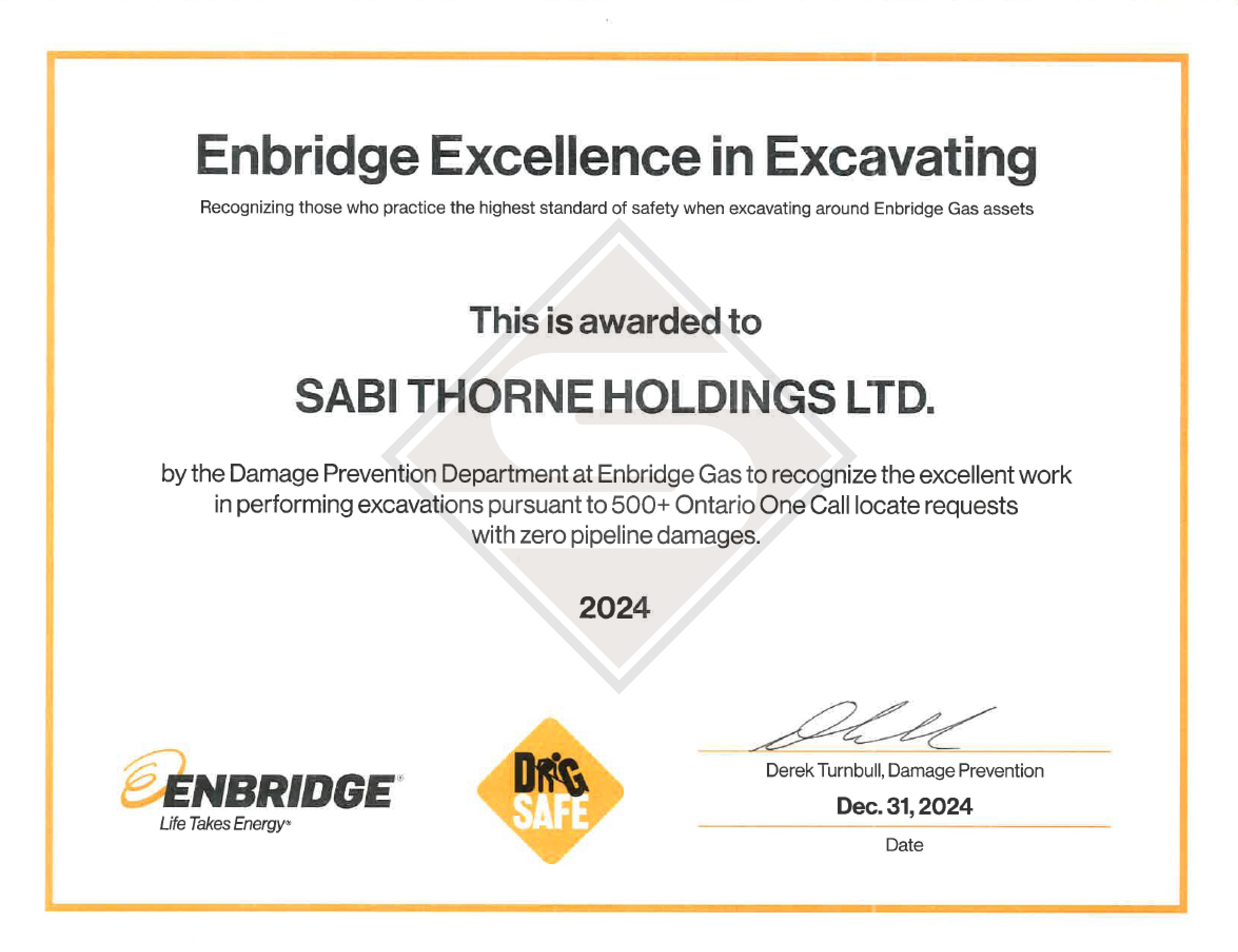
We are committed to Safety
Our Safety Commitment
At SER Sabi Group, we prioritize safety to the highest degree for all our employees. Every team member undergoes preparation and training from the most esteemed Certified Training Experts in the field.
Hydrovac and Horizontal Drilling Safety
Both hydrovac and HDD offer safe and efficient methods for underground work when proper safety protocols are followed. By prioritizing training, equipment maintenance, and environmental awareness, infrastructure teams can minimize risks and ensure successful project outcomes. Implementing these safety measures not only protects workers but also helps avoid costly damages and legal liabilities.
Hydrovac Safety Procedures
Hydrovac excavation uses high-pressure water and vacuum systems to safely expose underground utilities without damaging them. Here are some key safety practices:
Personal Protective Equipment (PPE):
Workers must wear appropriate PPE, including goggles, hard hats, gloves, and steel-toed boots, to protect against debris and other hazards.
Training and Competency:
Operators should be trained in equipment operation and safety techniques. Familiarity with the equipment’s manual and emergency procedures is crucial.
Underground Utility Location:
Before excavation, use services like “Call Before You Dig” to identify and mark underground utilities, minimizing the risk of accidental strikes.
Proper Equipment Use:
Follow manufacturer guidelines for pressure settings and equipment operation. Use the smallest nozzle suitable for the task and maintain a safe distance between the nozzle and the ground.
Environmental Awareness:
Be aware of overhead wires and other potential hazards. Use equipment with non-conductive coatings to prevent electrical accidents.
Horizontal Directional Drilling (HDD) Safety Measures
HDD is a trenchless method for installing pipelines and cables underground. Safety measures for HDD include:
Utility Avoidance:
Conduct visual inspections and use potholing to verify utility locations. Maintain communication with utility companies to prevent line strikes.
Site-Specific Safety Assessments:
Tailor safety protocols to the specific conditions of each site, including conducting walkthroughs to familiarize the team with potential hazards.
Communication and Monitoring:
Equip teams with radios and hand signals for effective communication. Continuously monitor drilling progress to address any issues immediately.
Equipment Maintenance:
Regular inspections and maintenance of drilling equipment are necessary to prevent failures that could lead to accidents.
Emergency Preparedness:
Train crews on emergency response procedures for incidents like gas or electrical line strikes. Have protocols in place for evacuation and contacting emergency services.
Bulk Water Delivery Safety
These safety measures help ensure that bulk water delivery maintains the quality and safety of the water from source to point of use.
Water Source:
- Water must be obtained from an approved, safe drinking water source that complies with regulatory standards.
- The source should be a regulated public water system or other approved supply.
Equipment and Vehicle Design:
- Tanks, containers, and equipment must be designed for potable water use and made of food-grade, non-toxic materials
- Tanks should be clearly labeled “POTABLE WATER ONLY” in large letters.
- Equipment should be in good repair and free of cracks or defects.
Sanitation:
- All surfaces in contact with water must be regularly cleaned and sanitized
- Specific sanitization procedures are recommended, such as chlorine solutions of at least 200 ppm
- Tanks should be sanitized at least 3 times per year and after any contamination incidents
Contamination Prevention:
- Measures must be taken to protect water, tanks, and equipment from contamination during filling, transport, and delivery.
- Inlets and openings should be sealed when not in use.
- Hoses and nozzles should be protected from contamination when not in use.
Water Quality Monitoring:
- Regular water quality testing is recommended, including microbiological testing at least quarterly.
- Maintain records of water sources, deliveries, and test results.
Operational Standards:
- Bulk water should not be stored in tanks for more than 3 days.
- Only food-grade lubricants should be used on equipment.
- Proper procedures for emergency disinfection should be available.
Personnel:
- Operators should practice good hygiene to prevent contamination.
- A certified operator should be present during water deliveries.
Regulatory Compliance:
- Operators must obtain necessary permits and comply with local health regulations.
- Notification to health authorities may be required for bulk water deliveries.
U-Fill Cement Safety
By following these safety guidelines, workers can minimize the risks associated with handling and applying U-Fill cement products. Here are some key safety considerations for U-Fill cement:
Personal Protective Equipment (PPE):
- Wear proper PPE including rubber boots, long-sleeved shirts, full-length pants, gloves, safety glasses or face shields, and dust masks or respirators when handling U-Fill cement.
- Use NIOSH/MSHA-approved respirators (P-, N- or R-95) when working in poorly ventilated areas.
Skin and Eye Protection:
- Avoid direct skin contact with wet cement, which can cause severe skin irritation and chemical burns.
- Use eye protection to prevent cement dust or wet cement from entering the eyes.
- Have eyewash stations available on site in case of eye contact.
Respiratory Protection:
- Avoid breathing cement dust, which can irritate the nose, throat, and respiratory system.
- Work in well-ventilated areas when possible.
Proper Handling and Application:
- Follow manufacturer’s instructions for mixing and application.
- Organize work so that all personnel and equipment are ready before placement.
- Do not install on frozen surfaces.
Temperature Considerations:
- Apply U-Fill cement in temperatures ranging from 7°C to 32°C (45°F to 90°F).
- Take special precautions in cold or hot weather, following appropriate ACI procedures.
Environmental and Health Hazards:
- Be aware that cement dust may contain silica, which can cause lung injuries and diseases if inhaled over time.
- U-Fill cement products may have lower environmental impact compared to traditional portland cement.
Emergency Procedures:
- Have first aid measures in place, including facilities for immediate washing of affected body surfaces.
- Seek medical treatment if breathing difficulties occur.
Training and Awareness:
- Ensure all workers are properly trained on the safe handling and use of U-Fill cement products.
- Read and understand all safety data sheets (SDS) before use.
Hazardous Material Transport Safety
Transporting hazardous materials poses serious risks to workers, the public, and the environment. At SER Sabi Group, we implement strict hazmat safety protocols to ensure compliance, containment, and safe delivery of regulated substances. Our Transportation of Dangerous Goods (TDG) certified teams are trained in advanced material handling, emergency response, and vehicle safety procedures to meet or exceed provincial and federal standards.
Hazmat Transport Safety Procedures:
Personal Protective Equipment (PPE)
All hazmat handlers must wear chemical-resistant suits, face shields, gloves, and respiratory protection as required by WHMIS classifications. Specialized PPE is provided based on the hazard class of the materials being transported.
Certified Training & Compliance
Operators receive extensive training in:
- TDG Regulations
- WHMIS 2015 Standards
- Spill containment and response
- Proper loading and unloading of hazardous substances
Each crew member must pass competency checks before participating in hazmat hauls.
Material Identification & Documentation
Every load is accurately labeled and accompanied by:
- Material Safety Data Sheets (MSDS)
- Shipping manifests
- Hazard placards
- Emergency contact instructions
This ensures full traceability and legal compliance throughout the journey.
Emergency Response Preparedness
Crews are trained in spill kits, fire suppression, and first response protocols. We maintain direct contact with local emergency services and have in-house procedures for:
- Evacuation plans
- Containment control
- Incident reporting and debriefing
Equipment & Vehicle Integrity
All hazmat transport vehicles are:
- DOT and TSSA compliant
- Regularly inspected
- Outfitted with secondary containment systems, spill kits, and emergency lights
Vehicles are cleaned and sanitized after each haul to prevent cross-contamination.
Route Risk Assessment
Before each haul, we conduct a route risk analysis to avoid high-population zones, environmentally sensitive areas, or restricted roadways. GPS tracking and route documentation are included in every job file.
Priority Hazmat Safety Training Includes:
TDG Certification – Transportation of Dangerous Goods
WHMIS 2015 – Updated hazardous labeling and communication protocols
Spill Response – Safe containment and cleanup of chemical spills
First Aid & CPR – Immediate medical response training
Confined Space Awareness – Safe material handling in limited-access environments
Fire Safety & Suppression – For flammable and combustible materials
CN & Rail Safety Training – For regulated material transfer by rail
PPE Protocols – Specific gear selection based on hazard class
Regulatory Compliance
SER Sabi Group’s Hazmat operations comply with:
Transport Canada’s TDG Act & Regulations
WHMIS (Workplace Hazardous Materials Information System)
Ontario Ministry of the Environment standards
COR Certified Health and Safety Program
Occupational Health and Safety Act (OHSA)
Environmental Protection Act (waste and spill management)
We carry full insurance and are licensed to haul Class 2 through Class 9 dangerous goods in Ontario and surrounding provinces.
Priority Safety Training Includes:
Electrical Safety for Hydrovac Operators
Ontario Worker & Supervisor Health & Safety Awareness
Level 2 Ground Disturbance
Confined Space Training
Propane Handling
CN Training
First Aid
WHMIS (Workplace Hazardous Materials Information System)
Personal Protective Equipment (PPE) Usage
Electrical & Utility Safety Association
Fall Arrest Techniques
Defensive Driving Instruction
Go Training
Health and Safety Compliance
SER Sabi Group adheres to and is approved by the following safety regulations and authorities:
Workplace Safety & Insurance Board
Technical Safety & Safety Authority
Occupational Health & Safety Act
Certificate of Recognition (COR)
The COR certification is recognized as the highest level of safety certification in our sector, verifying that a comprehensive health and safety program meeting national standards is in place.

Workplace Safety & Insurance Board
Technical Safety & Safety Authority

Occupational Health & Safety Act
COR